
Asset Information
Trusted information.
Better decisions.
We help infrastructure organisations establish the strategies, governance, standards and assurance needed to make confident decisions from trusted asset information.
Selected experience
Experience across complex asset information environments.
Our work spans asset information maturity, strategy and governance, data quality, information standards and enterprise asset management system readiness across major infrastructure organisations.
-
Auckland Transport
Asset Information Management Foundations ReviewReview of asset information management and data-quality practices, drawing on good practice frameworks and peer experience to identify root causes and establish a targeted roadmap for progressive improvement.
-
Top Energy
Asset Information Strategy and GovernanceAsset information maturity assessment, governance arrangements, strategy development and data-quality improvement supporting sustained confidence in maintenance, investment and asset-management decisions.
-
Clarus
Electricity and Gas Data Structure ReviewDevelopment of asset hierarchies, information requirements, master data principles and system-interface recommendations to support enterprise asset management system implementation across electricity and gas operations.
Why asset information matters
Information underpins effective asset management.
Physical assets cannot be managed effectively without information that is trusted, governed and connected to organisational decisions. Strong asset information capability gives people confidence in the evidence used to manage risk, prioritise investment and improve infrastructure performance.
-
Fit for purpose
Asset information should reflect how the organisation plans, operates, maintains and invests in its assets. Quality depends on whether information is suitable for the decisions and business processes that rely on it.
-
Governed throughout its lifecycle
Clear ownership, accountabilities, standards and controls are needed from information capture and validation through to use, maintenance, retention and retirement.
-
Connected to decisions
Information quality creates value when its relationship to asset risk, performance, cost and service outcomes is understood, enabling people to prioritise action and make decisions with confidence.
How we help
Building trusted asset information capability.
We help infrastructure organisations understand what information they need, establish clear governance and standards, improve data quality, prepare systems and connect information to the decisions that determine asset performance.

-
Asset Information Maturity Assessment
Assess current asset information capability, identify material gaps and establish a prioritised roadmap for practical, proportionate improvement.
-
Strategy and Governance
Develop asset information strategies, governance structures, ownership arrangements and improvement programmes aligned with organisational and asset management objectives.
-
Data Quality Frameworks and Monitoring
Define fit-for-purpose quality requirements, establish controls and implement ongoing monitoring that moves the organisation beyond periodic data cleansing.
-
Information Standards and Data Models
Establish asset hierarchies, taxonomies, information requirements and data standards that support consistent reporting, integration and lifecycle decision-making.
-
EAMS Preparation and Readiness
Connect asset management requirements to system structures, interfaces, master data principles and implementation priorities before configuration and migration decisions are made.
-
Analytics, Insights and Decision Support
Transform operational information into risk, condition, performance and lifecycle insights that support investment, maintenance and strategic planning.
Data health and assurance
Move beyond one-off data cleansing.
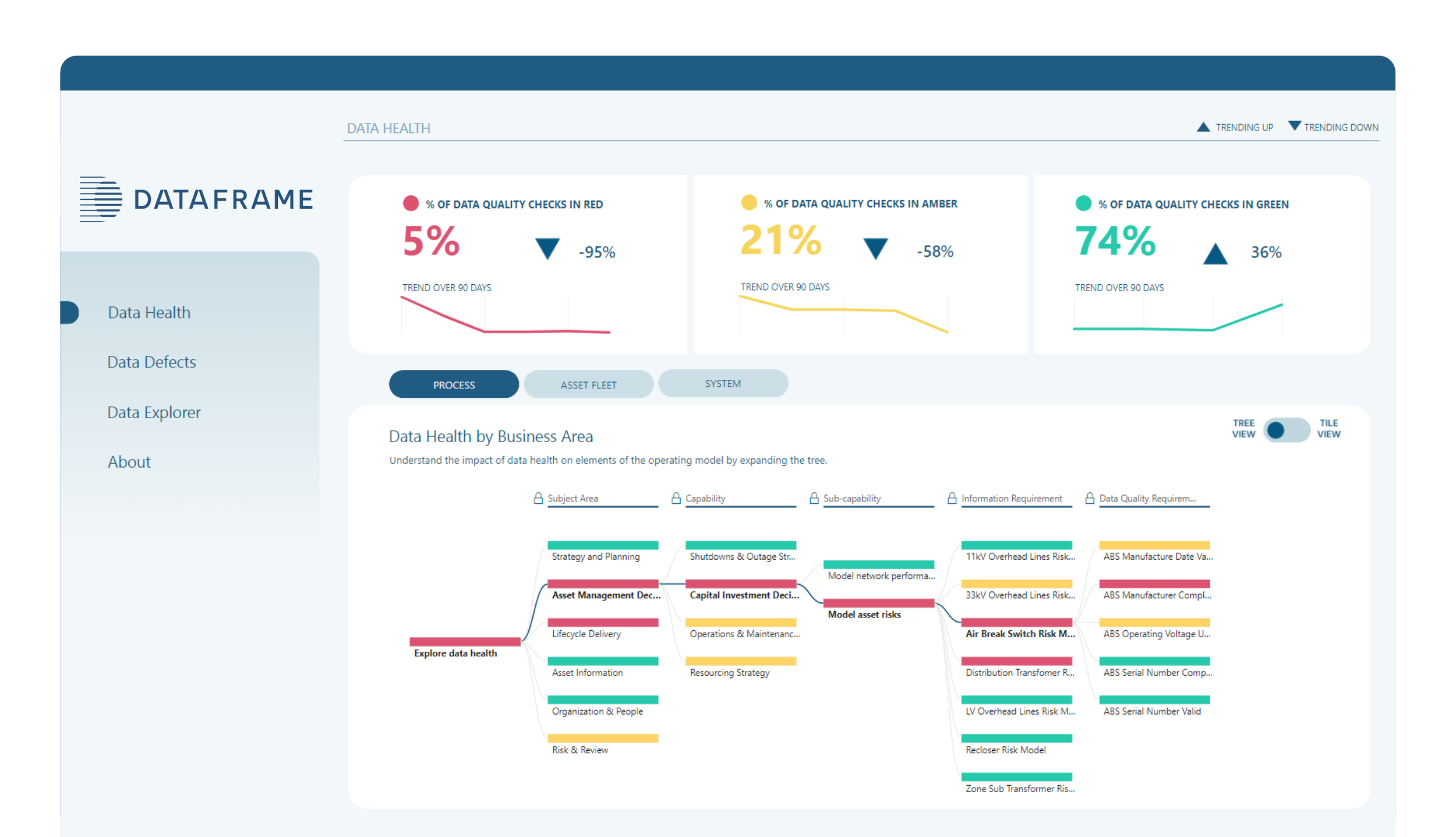
DataFrame links information held in operational systems to the business processes and asset management decisions that rely on it. Automated and manual checks provide ongoing visibility of data health, identify defects and help governance teams prioritise improvement.
-
Traceability
Connect information to business needs
Link business capabilities, asset management processes and decisions to the information requirements and data quality rules that support them.
-
Monitoring
Maintain visibility of data health
Apply automated and manual checks across relevant systems, asset fleets and information sources to identify defects and monitor improvement over time.
-
Governance
Prioritise improvement collaboratively
Give information owners, specialists and asset managers a shared basis for understanding risk, assigning accountability and prioritising corrective action.
Education and capability development
Build the knowledge needed to sustain improvement.
Strong asset information capability depends on people understanding why information matters, how it should be governed and how their own work affects its quality. Our training translates good practice into practical roles, behaviours and decisions.
-
Foundations
Asset Information Foundations
Build a shared understanding of asset information, its relationship to asset management and the practices needed to support confident infrastructure decisions.
-
Governance
Asset Information Governance
Develop practical capability in ownership, accountability, information standards, data quality, assurance and cross-functional governance arrangements.
-
Tailored delivery
In-house Training and Workshops
Tailored sessions for leadership teams, asset managers, information specialists and operational teams, aligned with the organisation’s systems, priorities and improvement programme.
Start a conversation
Strengthen confidence in your asset information.
Whether you need an independent maturity assessment, an asset information strategy, stronger governance and data quality controls, EAMS readiness support or ongoing data health monitoring, we can help establish a practical path forward.