
Efficient and accurate information disclosure applying data quality principles
Asset Dynamics Directors Andrew Gatland and Jules Congalton outline a proven methodology for accurately and efficiently meeting information disclosure requirements.

The role of information disclosure
Information Disclosure is one of the tools used by the New Zealand Commerce Commission to regulate utility businesses including electricity distributors, gas pipeline businesses, fibre network providers, and soon, water network operators. Businesses that are subject to information disclosure regulation must publish information each year detailing their performance.
Information Disclosure is an effective regulatory tool as it establishes a consistent data standard for capturing and reporting information, makes performance information transparent, enables benchmarking across suppliers, and allows performance trends to be tracked over time.
Regulated suppliers must disclose a range of information including asset management plans, capital and operating expenditure forecasts, asset condition information, capacity and demand forecasts, reliability forecasts, and asset management maturity self-assessments. This can be a significant demand on internal resources. By treating Information Disclosure as a critical business capability and developing efficient processes and systems, regulated businesses can minimise the long-term cost of meeting these requirements and manage down exposure to the risk of penalties for errors.
In this article we provide an overview of an approach to meeting Information Disclosure Requirements for quantitative information which has been implemented successfully in multiple electricity distributors. This approach links information disclosure requirements with information held in asset management information systems and establishes automated data quality checks that can be applied consistently to ensure data are of appropriate quality.
Such an approach is preferable to waiting to the end of the Regulatory Year before verifying information for disclosure, as any data quality issues introduced during the period will need to be addressed in a reactive fashion, creating the risk of further errors.
Information requirements
Precisely defining asset information requirements is fundamental to successful asset information management. Infrastructure organisations require asset management data and information for a wide range of purposes including asset planning and decision-making, tactical and operational planning, delivering work, evaluating performance, and financial and non-financial reporting to stakeholders. In many cases the same data is required for multiple purposes — for example, asset condition information may be used for assessing asset risk and renewal priority, confirming equipment is safe to operate, and reporting to stakeholders.
Information requirements associated with information disclosure should be treated no differently to other information requirements and will in many cases represent a high criticality data asset due to the compliance imperative.
Information requirements may be presented as a hierarchy organised under the major asset management Subject Areas and Capabilities that consume data. Figure 1 shows an example of a breakdown of the key asset management Subject Areas that consume data in an electricity distribution business. The information disclosure capability is shown as belonging to the "Risk and Review" Subject Area, with six Sub-capabilities representing the business capability to complete six asset management related information disclosure schedules.
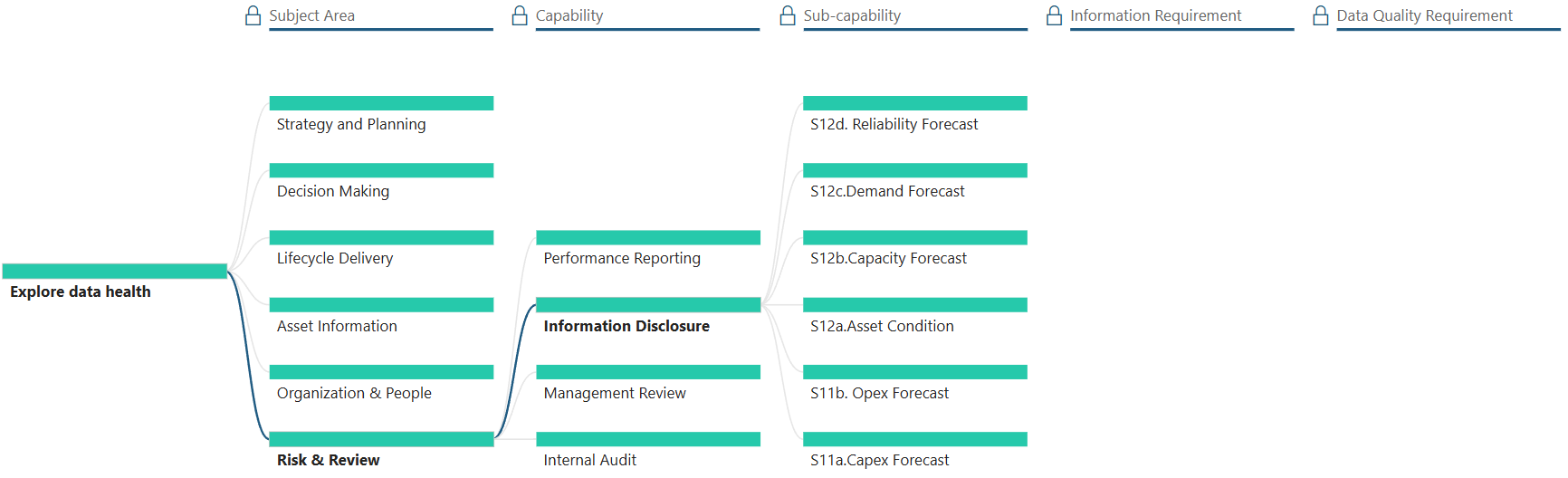
Figure 1: Information Disclosure Schedules within the Asset Management System
Schedule 12a: Report on Asset Condition requires a breakdown of asset condition by asset class as at the start of the forecast year. The data accuracy assessment relates to the percentage values disclosed in the asset condition columns. Also required is a forecast of the percentage of units to be replaced in the next five years. This Schedule is partially reproduced in Figure 2.

Figure 2: Electricity Distribution Information Disclosure Requirements Schedule 12a: Report on Asset Condition
The fields of Schedule 12a are represented as information requirements under the "S12a Asset Condition" Capability shown in Figure 3. These include condition ratings, data accuracy grades, and asset replacement forecasts for each asset category. Each information requirement must be associated with a field or fields in the source asset management information system, for example an Enterprise Asset Management System or Geographic Information System.

Figure 3: Information Requirements to Complete Schedule 12a: Report on Asset Condition
Data quality requirements
Once the information requirements have been identified, applicable data quality requirements can be determined. Data quality requirements are specific algorithmic checks to be performed against the data to confirm its fitness for purpose. These checks will typically be based on data quality dimensions such as those shown in Figure 4.

Figure 4: Data Quality Dimensions
Four data quality requirements have been defined for underground cable condition data.
The first, "Complete", checks that condition data is complete — in other words, that 100% of cable segments have a value entered in the Commerce Commission Condition field within the EAMS.
The second, "Valid", checks that 100% of cable segment condition data is valid, having a value of H1 to H5 or Unknown.
The third, "Consistent", checks that the average condition grade of the fleet has not changed by greater than a defined threshold compared to what was disclosed in the previous period.
The fourth, "Percent Unknown", checks that the number of cable segments with condition Unknown has not increased since the last period — an increase could indicate an error, as current installation and condition assessment processes require that a condition grade is provided.

Figure 5: Data Quality Requirements
With the data quality requirements established and implemented as queries across the relevant data, it is possible to report on data quality. Figure 6 shows an amber check against the Consistent data quality requirement, indicating that the condition data for underground cables should be reviewed to confirm that the change since the previous reporting period is accurate. Such a change could reflect an error, but could equally result from the implementation of a proactive cable testing programme.

Figure 6: Data Quality Checks
A clear perspective on data quality for each information disclosure schedule can be produced in this way. If data quality issues are monitored continuously, errors can be addressed as they arise and root causes identified and resolved. Producing quantitative information then becomes a straightforward, efficient, and low-cost process.
Conclusion
The Commerce Commission's information disclosure regime continues to expand. Following its final determination on information disclosure regulation for water services providers, water network operators now join electricity distributors, gas pipeline businesses, and fibre network providers in being subject to these requirements.
Regulated businesses should treat information disclosure as a critical business capability and develop efficient processes and systems to minimise the long-term cost of compliance and manage down exposure to the risk of penalties for incorrect disclosure.
The approach outlined in this article has proven effective for managing information disclosure obligations. By maintaining regular reporting of data quality, errors can be corrected as they arise and the root causes of data quality problems pinpointed and addressed — making accurate disclosure a manageable, ongoing process rather than an annual scramble.
Need support with information disclosure compliance?Asset Dynamics works with regulated utilities to develop efficient, evidence-based information disclosure processes and data quality systems.